

Can Weight Loss Surgery Cure Sleep Apnea?
Sleep apnea and obesity are closely linked, often creating a cycle that affects energy levels, heart health, and overall quality of life. For many individuals, excess weight contributes to airway obstruction and disrupted breathing during sleep. Surgical weight loss has emerged as a treatment option that can significantly influence these underlying factors. Understanding how weight reduction impacts sleep-related breathing disorders is an important part of setting realistic expectations. In this blog, we explore the connection between weight loss surgery and sleep apnea outcomes, including what improvements are possible and what factors still matter.
Key Takeaways
- Bariatric surgery significantly improves obstructive sleep apnea in most obese patients, but a complete cure (AHI below five events per hour) occurs in roughly 30–55% of cases based on long-term studies.
- Many people still experience mild to moderate sleep apnea after surgery and may need continued CPAP therapy or other treatments even after major weight loss.
- Noticeable improvements in sleep quality and daytime energy often appear within 3–6 months, with the best remission rates typically seen at 12–18 months post-surgery.
- Long-term data at around 5 years show sustained benefits when weight loss is maintained, but weight regain can lead to recurrence of sleep disordered breathing.
- Follow-up sleep studies, CPAP adjustments, and ongoing lifestyle changes are essential to maintain benefits and detect persistent or recurrent sleep apnea.
Can Weight Loss Surgery Really Cure Sleep Apnea?
If you’re wondering whether weight loss surgery can truly cure your sleep apnea, you deserve a straightforward answer before we dive into the details. The short answer is: yes, bariatric surgery can completely resolve obstructive sleep apnea OSA in a significant number of patients, but it’s not a guaranteed cure for everyone.
Research tells us that roughly one-third to one-half of patients who undergo bariatric surgery experience complete remission of their sleep apnea, meaning their apnea hypopnea index drops below five events per hour. A 2024 multicenter trial following 150 patients found that approximately 55% achieved this level of remission at 5 years after laparoscopic gastric bypass. Early studies have also shown that while OSA affects up to 96% of morbidly obese patients seeking bariatric procedures, marked improvement typically appears within 3–6 months after surgery.
Your individual results depend on several factors: how much weight you lose and keep off, your age, your baseline anatomy, and whether you have purely obstructive sleep apnea or a mixed or central component. Surgery is an incredibly effective treatment that can break the obesity-OSA cycle and transform your health, but it’s most helpful to view it as a powerful tool rather than a guaranteed permanent cure. Setting realistic expectations from the start helps you and your care team work together toward the best possible outcome.
Understanding Obstructive Sleep Apnea and Its Link to Obesity
Obstructive sleep apnea is a condition where your upper airway repeatedly collapses during sleep, causing you to stop breathing for brief periods (called apneas) or experience significantly reduced airflow (hypopneas). These interruptions, sometimes happening dozens or even hundreds of times per night, fragment your sleep and lower your blood oxygen levels, often without you being fully aware of what’s happening.
Common Symptoms of Sleep Apnea
If you or a loved one has noticed any of these signs, they may point to untreated sleep apnea:
- Loud, persistent snoring
- Witnessed pauses in breathing during sleep
- Gasping or choking sensations at night
- Waking with morning headaches or dry mouth
- Excessive daytime sleepiness that interferes with work or daily activities
- Difficulty concentrating or mood changes
How Common Is Sleep Apnea in People Seeking Bariatric Surgery?
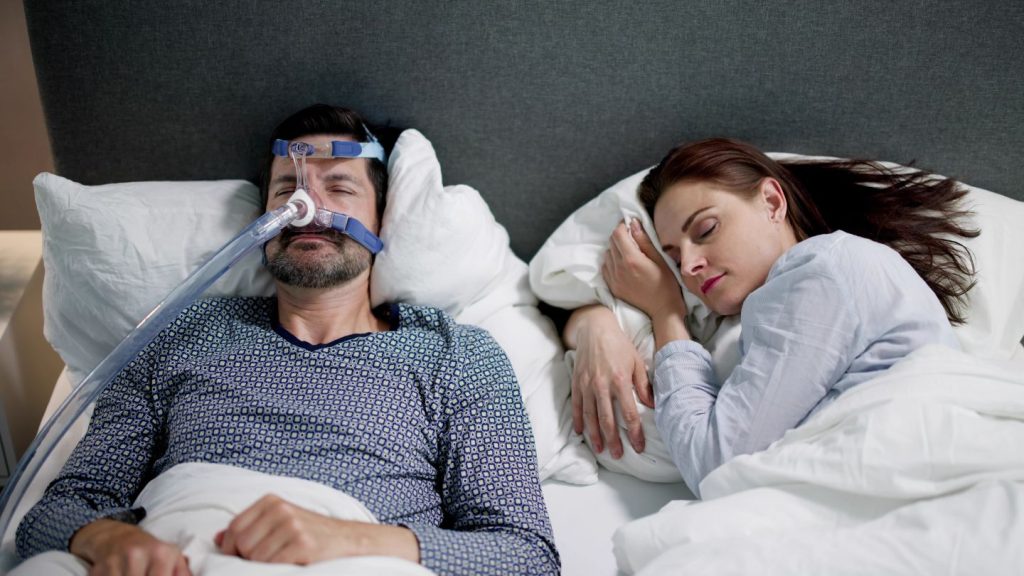
Sleep apnea affects roughly 15–20% of adult patients in the general population. However, among people considering bariatric surgery, the numbers are dramatically higher. Pre-surgical sleep studies reveal that 64–97% of bariatric surgery candidates have some degree of sleep apnea, and up to two-thirds of these cases are only discovered during pre-operative testing. Many patients have lived with undiagnosed sleep disorders for years.
The Obesity-Sleep Apnea Connection
The relationship between obesity and sleep apnea is direct and physiological. When excess fatty tissue accumulates around your neck, tongue, and throat, it narrows your upper airway and makes it more likely to collapse when your throat muscles relax during sleep. Additionally, abdominal fat reduces lung volumes and destabilizes your airway further.
This connection explains why people with higher body mass index face a greater risk, and why addressing body weight through surgical weight loss can be so transformative for breathing during sleep.
Health Risks of Untreated Sleep Apnea
Leaving sleep apnea untreated carries serious health consequences beyond poor sleep:
| Health Risk | How Sleep Apnea Contributes |
| High blood pressure | Repeated oxygen drops and stress responses raise blood pressure. |
| Pulmonary hypertension | Chronic low oxygen strains the heart and pulmonary vessels |
| Heart complications | Increased risk of arrhythmias, heart attack, and heart failure |
| Major adverse cardiovascular events | Higher rates of stroke and sudden death |
| Type 2 diabetes | Worsened insulin resistance and metabolic syndrome |
| Accidents | Daytime sleepiness increases the risk of traffic and workplace accidents. |
Understanding these risks helps explain why treating sleep apnea, whether through continuous positive airway pressure, weight management, or surgery, is so important for your long-term cardiovascular health and quality of life.
How Weight Loss Surgery Can Improve Sleep Apnea

Bariatric surgery, also known as metabolic surgery, refers to surgical procedures designed to help patients lose weight by changing the digestive system. The two most common procedures performed today are laparoscopic sleeve gastrectomy (where a portion of the stomach is removed to create a smaller, banana-shaped stomach) and laparoscopic gastric bypass. Long-term improvement depends not only on weight loss but also on dietary choices that align with guidance on foods to avoid after bariatric surgery to support healing and sustained metabolic benefits.
These procedures typically result in 50–80% excess weight loss within 12–18 months. Many patients lose 25–35% of their total body weight, a level of successful weight loss that’s difficult to achieve and maintain through diet and exercise alone.
How Does Weight Loss Improve Sleep Apnea?
When obese patients lose substantial weight after bariatric surgery, several changes occur that directly benefit breathing during sleep:
- Reduced fatty tissue around the airway: As fat deposits in the neck, tongue, and pharynx decrease, the upper airway becomes wider and less prone to upper airway collapse when muscles relax during sleep.
- Improved lung function: With less abdominal fat pressing on the diaphragm, lung volumes increase, and chest wall mechanics improve, making breathing easier overall.
- Metabolic and hormonal benefits: Weight loss achieved through bariatric surgery improves insulin resistance, reduces systemic inflammation, and alters gut hormones like GLP-1 and ghrelin. These changes may improve breathing control and airway muscle tone even before you reach your maximum weight loss.
What Does Early Research Show?
A prospective study following 27 morbidly obese patients (with an average body mass index of around 48 kg/m²) found significant drops in both apnea hypopnea index and Epworth sleepiness scale scores within approximately 5 months of surgery. Remarkably, the number of patients requiring CPAP fell from 15 to just 3.
Many patients undergoing bariatric surgery report feeling more energetic, sleeping more soundly, and experiencing less daytime sleepiness within months of their procedure, often before they’ve reached their final weight goal. This early improvement can be incredibly motivating as you continue your weight loss journey.
What the Research Says: Improvement vs Cure
When we look at the medical literature on improving sleep apnea through bariatric surgery, we find consistent evidence of significant improvement, but also important nuances about what “cure” really means. The degree of improvement seen with surgery helps explain why outcomes often surpass those achieved with bariatric surgery vs diet and exercise alone for patients with obesity-related sleep apnea.
Short-Term Findings (3–6 Months)
In the months immediately following sleeve gastrectomy or gastric bypass surgery, studies consistently show:
- Average apnea hypopnea index scores fall significantly
- Epworth sleepiness scale scores improve, indicating less daytime sleepiness
- CPAP pressure requirements decrease as airways become less obstructed
- However, complete OSA remission is uncommon this early; most patients still have some degree of sleep disordered breathing
Long-Term Data (5 Years and Beyond)
The most compelling evidence comes from longer follow-up periods. A 5-year prospective multicenter trial published in 2024, following 150 bariatric patients (111 with OSA at baseline), found:
| Measurement | Before Surgery | 5 Years After Surgery |
| Mean AHI | 28–29 events/hour | 8.8 events/hour |
| Patients with severe OSA | Baseline group | Significantly reduced |
| Complete remission (AHI <5) | 0% | ~55% |
| Persistent moderate or severe OSA | 100% | ~20% |
Understanding Remission Rates
Across multiple studies and a comprehensive systematic review of the literature, remission rates vary:
- 26–76% achieve OSA remission in the first year
- 30–55% maintain complete remission long-term
- 65–86% experience a significant reduction in symptoms and severity
It’s important to understand that even partial improvement, going from severe OSA to mild OSA, for example, dramatically lowers your cardiovascular risk and improves your quality of life. The Cleveland Clinic’s MOSAIC study found that bariatric surgery patients with moderate-severe OSA who achieved sustained weight loss had 42% lower risk of major adverse cardiovascular events and a 37% lower all-cause mortality compared to non-surgical controls.
Quality-of-life assessments using standardized measures show major gains in mobility, breathing, sleep quality, and overall vitality, especially for patients with OSA who underwent bariatric surgery. Sustained remission of OSA is closely tied to maintaining weight loss using strategies consistent with how to keep the weight off after bariatric surgery over time.
The bottom line: bariatric surgery resulted in one of the most effective long-term interventions we have for obesity related comorbidities, including OSA. However, objective testing through follow-up sleep studies is essential to confirm whether you’ve achieved a true cure or a significant improvement that still benefits from ongoing management.
Factors That Determine Whether Sleep Apnea Will Go Away
Not all patients experience the same outcomes after bariatric surgery. Understanding what influences your chances of complete OSA remission can help you set realistic expectations and work proactively with your care team. Individual outcomes are strongly influenced by surgical expertise, making careful decision-making similar to principles outlined in how to choose a bariatric surgeon, an important part of long-term success.
Major Predictors of Remission
- Amount and durability of weight loss: This is the single most important factor. Greater and sustained reduction in body mass index strongly correlates with apnea hypopnea index improvement. Patients who maintain their weight loss long-term have the best outcomes.
- Baseline OSA severity: Patients with mild OSA or moderate OSA are more likely to achieve full remission than those starting with very severe OSA (more than 30 events per hour). More severe disease often means more structural changes that may not fully reverse with weight loss alone.
- Type of bariatric procedure: Both laparoscopic sleeve gastrectomy and Roux-en-Y gastric bypass significantly improve OSA. Some data suggest bypass may have slightly stronger metabolic and anti-inflammatory effects, but both procedures show excellent results. Your bariatric surgeon can help you understand which approach fits your situation best. Procedure-specific differences discussed during evaluation often mirror considerations found in choosing the right bariatric surgery for you when balancing metabolic outcomes and comorbidity resolution.
Anatomical and Age-Related Factors
Even after significant weight loss, certain structural features can leave residual obstruction:
- Narrow jaw or small airway
- Thick tongue base
- Deviated septum or chronic nasal obstruction
- Enlarged tonsils
Additionally, older age and reduced muscle tone in upper airway structures may limit complete normalization of breathing during sleep. As we age, the muscles that keep our airway open become less responsive; this is one reason predicting sleep apnea outcomes requires individualized assessment.
Type of Sleep Apnea Matters
Bariatric surgery primarily targets obstructive sleep apnoea caused by physical airway collapse from excess weight. If you have central or mixed sleep apnea, where the brain’s breathing control centers don’t send proper signals, these components may not resolve even after successful weight loss.
A sleep specialist can perform further evaluation to determine whether you have purely obstructive disease or other sleep disorders that require specialized treatment approaches.
Our recommendation: Before surgery, discuss your individual risk factors with both your bariatric surgeon and sleep medicine team. Understanding your specific situation helps everyone work toward realistic goals together.
Timeline: When to Expect Sleep Apnea Improvements After Bariatric Surgery
Improvements in sleep apnea generally track with weight loss, but many patients notice benefits surprisingly early, sometimes due to hormonal and metabolic changes that occur before maximum weight reduction.
What to Expect at Each Stage
3–6 Months Post-Surgery:
- Many patients report less snoring and fewer nighttime awakenings
- Partners often notice you’re breathing more quietly and regularly
- Epworth sleepiness scale scores typically improve
- Sleep studies show clear reductions in apnea hypopnea index
- CPAP pressure may need adjustment as airways open up
12–18 Months Post-Surgery:
- This is typically when patients lose weight to their maximum extent
- Remission rates (AHI below 5) are highest during this window
- Many OSA patients can discontinue or significantly reduce CPAP use under medical supervision
- Energy levels, mood, and cognitive function often reach their peak improvement
5 Years and Beyond:
- Benefits remain strong if weight is largely maintained
- Some patients experience recurrence with weight gain or aging
- Ongoing monitoring remains important
When Should You Have Follow-Up Sleep Testing?
Objective reassessment with a sleep study is most informative once your weight has stabilized, commonly 12–18 months after surgery. Some centers repeat testing earlier (around 6 months) if you’re experiencing rapid weight loss and symptom changes, primarily to adjust CPAP pressures.
Important: Even if your symptoms feel dramatically better within weeks, please don’t stop CPAP therapy on your own without medical guidance and testing. How you feel doesn’t always perfectly match what’s happening physiologically during sleep.
Read More: What to Expect in the First Year After Bariatric Surgery?
Why Sleep Apnea Sometimes Persists After Successful Weight Loss
Despite achieving major weight loss, approximately 15–45% of bariatric patients with pre-existing OSA still have some degree of sleep apnea long-term. Understanding why this happens can help you stay vigilant and work with your care team effectively.
Common Reasons for Persistent Sleep Apnea
- Residual obesity: Even after significant weight loss achieved through surgery, some patients remain in the overweight or obese BMI range. While dramatically improved, some airway compromise may remain.
- Fixed anatomical issues: Jaw structure, chronic nasal obstruction, or unchanged tonsillar tissue can continue to narrow the airway regardless of weight changes.
- Age and muscle tone: Decreased neuromuscular responsiveness in older adult patients can maintain OSA despite lower weight. The muscles that keep your throat open simply don’t respond as quickly as they once did.
- Central or complex sleep apnea: These forms are driven by factors like heart failure, opioid use, or neurologic conditions that aren’t corrected by weight loss alone.
The Weight Regain Factor
Weight regain years after surgery is a key cause of recurrent OSA. Research shows that even a 10% increase in body weight can substantially raise sleep apnea risk and severity. This is why lifelong attention to weight management matters so much.
We encourage all our patients to maintain long-term follow-up with their bariatric team and a sleep specialist. If symptoms return, such as snoring, choking sensations, daytime fatigue, or dry mouth upon waking, don’t hesitate to reach out. Early detection of recurrence means earlier intervention and better long-term cardiovascular outcomes.
Read More: Top 10 Steps to Prepare for Weight Loss Surgery
Final Thoughts
Weight loss surgery can significantly reduce or even resolve obstructive sleep apnea for many patients, but improvement follows a gradual timeline and varies by individual. Ongoing monitoring, healthy weight maintenance, and follow-up sleep studies are essential to confirm remission and protect long-term sleep and cardiovascular health.
At Lenox Hill Bariatric Surgery Program, we help evaluate how surgical weight loss may improve sleep apnea and overall health through personalized care for bariatrics in NY. Our treatment options include the sips procedure, duodenal switch surgery, endoscopic sleeve, gastric bypass, and gastric sleeve. Contact us to schedule a consultation and let our team support your journey toward healthier sleep and lasting results.
Frequently Asked Questions
Do I still need a sleep study if I stop snoring after bariatric surgery?
Yes, objective testing is still recommended even if snoring improves. Snoring alone does not confirm resolution of obstructive sleep apnea, as apnea events may persist without obvious symptoms. A follow-up sleep study measures your apnea–hypopnea index and confirms whether cardiovascular and respiratory risks have truly resolved.
Can I have weight loss surgery mainly to treat my sleep apnea?
Weight loss surgery is typically approved based on BMI criteria, usually 40 or higher, or 35 with serious conditions like obstructive sleep apnea. OSA is a recognized qualifying comorbidity, especially when CPAP therapy fails. A consultation helps determine eligibility and appropriate treatment options.
If my OSA is cured after surgery, can it come back later?
Yes, obstructive sleep apnea can recur. Weight regain is the most common cause, but aging, hormonal changes, and new medical conditions may also contribute. Ongoing symptom awareness and repeat sleep studies are recommended if snoring, fatigue, or breathing pauses return over time.
Does the type of bariatric surgery I choose change my chances of OSA remission?
Both sleeve gastrectomy and gastric bypass significantly reduce OSA severity for most patients. Some studies suggest bypass may offer slightly greater metabolic benefits, but anatomy, health history, and surgeon expertise usually play a larger role than procedure type alone in remission outcomes.
What if I have central or complex sleep apnea? Will bariatric surgery still help?
Bariatric surgery mainly improves obstructive sleep apnea caused by airway narrowing from excess weight. Central or complex sleep apnea involves different mechanisms and often requires specialized therapies. Surgery may help the obstructive component, but additional treatment guided by a sleep specialist is usually necessary.